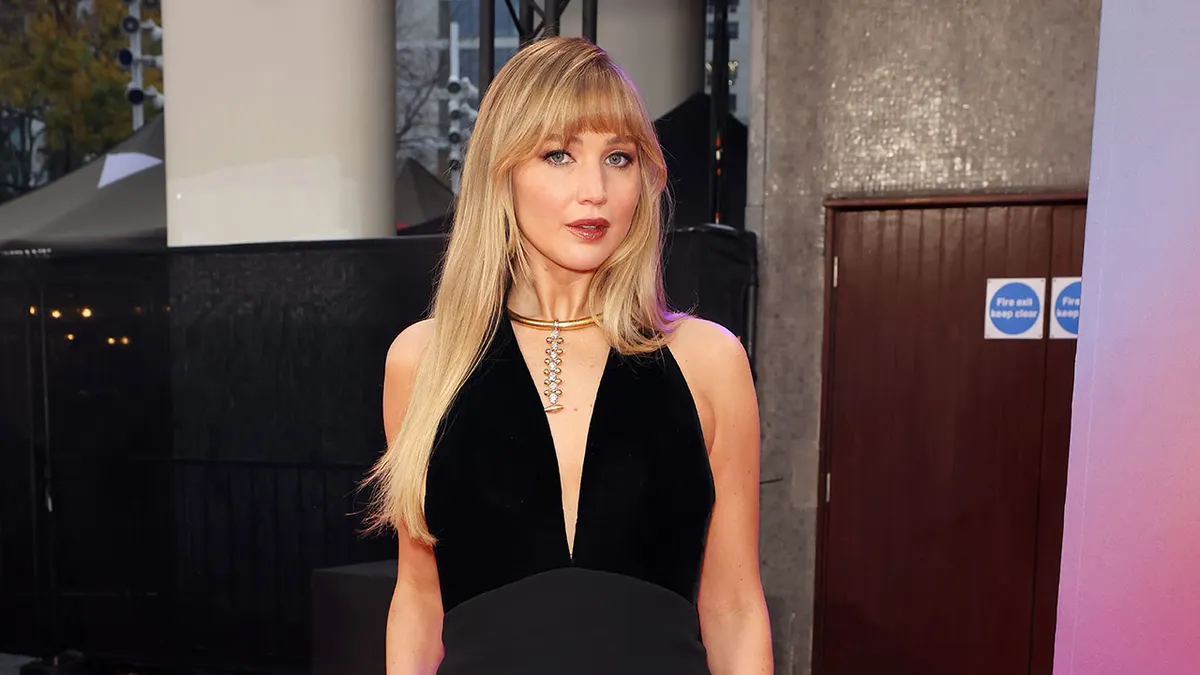
Jennifer Lawrence has become one of Hollywood’s most versatile and beloved actresses, known for her raw talent, relatable personality, and ability to dominate both blockbuster franchises and intimate dramas. Born on August 15, 1990, in Indian Hills, Kentucky, a suburb northeast of Louisville, Jennifer Lawrence grew up in a middle-class family that fostered her independent spirit. Her journey from a tomboyish kid in the American heartland to an Oscar-winning superstar is a testament to determination, natural charisma, and a bit of serendipity. Over the years, she has amassed a filmography that grossed over $6 billion worldwide, earned multiple Academy Award nominations, and solidified her status as a cultural icon. This article delves into the key phases of her life and career, highlighting the pivotal moments that propelled her to fame.
Early Life
Jennifer Lawrence’s early years were marked by a blend of rural simplicity and budding creativity. She was the youngest of three children, with two older brothers, Ben and Blaine, who treated her like one of the boys. Her father, Gary Lawrence, owned a construction firm, while her mother, Karen (née Koch), managed a children’s summer camp. The family lived on a horse farm, where young Jennifer Lawrence spent much of her time riding horses and engaging in outdoor activities. She had a pony named Muffin, and horseback riding became a favorite pastime, though it wasn’t without mishaps—she once injured her tailbone after falling off a runaway horse.
Raised in a Christian household, Jennifer Lawrence attended Kammerer Middle School in Louisville. From a young age, she exhibited hyperactivity and social anxiety, often feeling like an outsider among her peers. Her mother encouraged toughness, refusing to let her play with other girls in preschool because she was “too rough.” Instead, Jennifer Lawrence joined cheerleading, softball, field hockey, and even played on a boys’ basketball team coached by her father. Despite these involvements, team sports didn’t appeal to her; she preferred individual pursuits that allowed her to channel her energy.
Acting emerged as a outlet for her anxieties. At age nine, Jennifer Lawrence made her stage debut in a church play as a prostitute from the Book of Jonah, which amused her family and sparked her interest in performance. She continued with roles in church musicals and school productions, finding that being on stage made her feel accomplished and alleviated her loneliness. By 14, during a family vacation in New York City, a talent scout spotted her on the street and arranged an audition. Her cold reading impressed agents so much that one called it the best they’d seen from a child that age. Though her mother was initially skeptical, the family briefly relocated to New York, where Jennifer Lawrence began modeling for ads and small acting gigs.
Convinced acting was her path, Jennifer Lawrence dropped out of school at 14 without earning a GED or diploma, prioritizing her career over formal education. She described herself as “self-educated” and worked as an assistant nurse at her mother’s camp between auditions. Her parents eventually supported the move to Los Angeles, recognizing her passion. This unconventional start laid the foundation for a career built on instinct rather than traditional training.
Early Career
Jennifer Lawrence’s entry into professional acting was gradual but promising. In 2006, she landed a minor role in the unaired TV pilot “Company Town,” followed by guest appearances on shows like “Monk” and “Medium” in 2007. Her first significant break came that same year when she was cast as Lauren Pearson, the rebellious teenage daughter, in the TBS sitcom “The Bill Engvall Show.” The series ran for three seasons until 2009, earning her a Young Artist Award for Outstanding Young Performer in a TV Series. During this time, she balanced TV work with her film debut in the 2008 drama “Garden Party,” playing a troubled teen named Tiff.
She quickly transitioned to more substantial roles. In “The Poker House” (2008), directed by Lori Petty, Jennifer Lawrence portrayed Agnes, the eldest daughter in a dysfunctional family dealing with addiction and abuse. Her performance won her the Outstanding Performance Award at the Los Angeles Film Festival. That year, she also starred in “The Burning Plain” alongside Charlize Theron and Kim Basinger, earning the Marcello Mastroianni Award for Best Emerging Actress at the Venice Film Festival. These early indie projects showcased her ability to handle complex, emotionally demanding characters, setting her apart from typical teen actors.
By 2009, Jennifer Lawrence was gaining traction in independent cinema, but she still faced the challenges of a young actress in Hollywood. She auditioned relentlessly, often for roles that required her to tap into raw vulnerability. Her preparation involved immersing herself in the characters’ worlds, a method she would refine in later years.
Career Breakthrough
The turning point in Jennifer Lawrence’s career arrived with the 2010 independent drama “Winter’s Bone.” Directed by Debra Granik, the film cast her as Ree Dolly, a resilient 17-year-old in the Ozark Mountains searching for her missing father to save her family from eviction. To prepare, Jennifer Lawrence lived in the Ozarks, learned to skin squirrels, chop wood, and fight—skills that added authenticity to her portrayal. The role demanded physical and emotional grit, and her performance was hailed as a revelation.
“Winter’s Bone” premiered at the Sundance Film Festival to critical acclaim, winning the Grand Jury Prize. Jennifer Lawrence received her first Academy Award nomination for Best Actress at age 20, making her the second-youngest nominee in that category at the time. She also earned nominations for a Golden Globe and Screen Actors Guild Award, along with the National Board of Review’s Breakthrough Performance Award. The film’s success opened doors to major studios, proving she could carry a movie on her shoulders.
Following this, Jennifer Lawrence joined the superhero genre as the shape-shifting mutant Mystique in “X-Men: First Class” (2011). The role required extensive makeup sessions—up to eight hours—and physical training, including yoga and weight loss. While not her primary breakthrough, it introduced her to blockbuster audiences. In the same year, she appeared in smaller films like “Like Crazy” and “The Beaver,” but “Winter’s Bone” remained the catalyst that shifted her from supporting roles to leading lady status.
Rise to Stardom
Jennifer Lawrence’s ascent to global stardom was meteoric, fueled by a string of high-profile roles that blended commercial success with critical praise. In 2012, she starred as Katniss Everdeen in “The Hunger Games,” adapted from Suzanne Collins’ bestselling novels. As the resourceful archer leading a rebellion in a dystopian world, she underwent intense training in archery, rock climbing, and combat, sustaining minor injuries in the process. The film grossed over $690 million worldwide, making her one of the highest-grossing action heroines ever. She reprised the role in three sequels: “Catching Fire” (2013, $865 million), “Mockingjay – Part 1” (2014, over $750 million), and “Part 2” (2015, over $650 million). The franchise not only elevated her fame but also highlighted her advocacy for strong female characters.
That same year, Jennifer Lawrence collaborated with director David O. Russell on “Silver Linings Playbook,” playing Tiffany Maxwell, a young widow with bipolar disorder. Her nuanced performance opposite Bradley Cooper earned her the Academy Award for Best Actress at age 22—the second-youngest winner ever—along with a Golden Globe, Screen Actors Guild Award, and Independent Spirit Award. This marked the beginning of a fruitful partnership with Russell, leading to “American Hustle” (2013), where she played the unpredictable Rosalyn Rosenfeld, winning a BAFTA and Golden Globe for Best Supporting Actress, plus another Oscar nomination.
Her versatility shone in subsequent projects. In “Joy” (2015), again with Russell, she portrayed inventor Joy Mangano, securing another Golden Globe and Oscar nomination. She continued as Mystique in “X-Men: Days of Future Past” (2014), “Apocalypse” (2016), and “Dark Phoenix” (2019). Other notable films included the sci-fi romance “Passengers” (2016) with Chris Pratt, the psychological horror “mother!” (2017) directed by Darren Aronofsky (with whom she briefly dated), and the spy thriller “Red Sparrow” (2018).
After a brief hiatus in 2018-2020 to recharge, Jennifer Lawrence returned with “Don’t Look Up” (2021), earning a Golden Globe nomination for her role as astronomer Kate Dibiasky. She produced and starred in the indie drama “Causeway” (2022) as a soldier recovering from trauma, and the raunchy comedy “No Hard Feelings” (2023), which garnered another Golden Globe nod. In 2025, she executive-produced and starred in “Die, My Love,” a dark comedy that premiered at Cannes to acclaim, receiving a six-minute standing ovation. Looking ahead, she reprises Katniss in “The Hunger Games: Sunrise on the Reaping” (2026).
Beyond acting, Jennifer Lawrence founded Excellent Cadaver in 2018, producing documentaries like “Bread and Roses” (2023) about Afghan women and “Zurawski v Texas” (2024) on abortion rights. Her accolades include three Golden Globes, one BAFTA, and four Oscar nominations, with films grossing billions. Forbes named her the highest-paid actress in 2015 ($52 million) and 2016 ($46 million), and she appeared in Time’s 100 most influential people list in 2013.
Jennifer Lawrence’s personal life has often intersected with her public persona. She dated co-star Nicholas Hoult from 2010 to 2014, then director Darren Aronofsky briefly in 2016-2017. In 2019, she married art gallery director Cooke Maroney; they welcomed their first son, Cy, in 2022, and a second child in 2025. She has been open about suffering two miscarriages and advocates for reproductive rights, attending rallies and criticizing the overturn of Roe v. Wade. Politically active, she shifted from Republican leanings to supporting Democrats, endorsing Joe Biden in 2020 and speaking against Donald Trump. A feminist, she has addressed the gender pay gap in Hollywood and supported causes like Planned Parenthood and anti-corruption efforts through RepresentUs. In 2014, she was a victim of a photo hack, which she called a “sex crime.” Through her Jennifer Lawrence Foundation, established in 2015, she donates to organizations like Boys & Girls Clubs and Special Olympics, raising millions for charities.
Jennifer Lawrence’s story is one of resilience and authenticity. From her Kentucky roots to Hollywood’s pinnacle, she has navigated fame with humor and grace, often poking fun at herself—like her famous Oscar trip in 2013. As she continues to evolve, balancing motherhood, producing, and acting, her legacy as a trailblazer remains secure.
FAQ
What is Jennifer Lawrence’s full name and birthdate?
Jennifer Shrader Lawrence was born on August 15, 1990, in Indian Hills, Kentucky.
How did Jennifer Lawrence get discovered?
At age 14, during a family trip to New York City, a talent scout spotted her on the street and arranged an audition, leading to her signing with an agency.
What was Jennifer Lawrence’s breakthrough role?
Her breakthrough came in 2010 with “Winter’s Bone,” where she played Ree Dolly, earning her first Oscar nomination.
How many Oscars has Jennifer Lawrence won?
She has won one Academy Award for Best Actress for “Silver Linings Playbook” (2012) and received three additional nominations.
What franchises is Jennifer Lawrence known for?
She starred as Katniss Everdeen in “The Hunger Games” series (2012-2015) and as Mystique in the “X-Men” films (2011-2019).
Is Jennifer Lawrence married?
Yes, she married Cooke Maroney in 2019, and they have two children born in 2022 and 2025.
What recent projects has Jennifer Lawrence been involved in?
In 2025, she starred in “Die, My Love,” and she is set to reprise Katniss in “The Hunger Games: Sunrise on the Reaping” in 2026.
What causes does Jennifer Lawrence support?
She advocates for reproductive rights, gender equality, and anti-corruption, and founded the Jennifer Lawrence Foundation to support youth organizations.