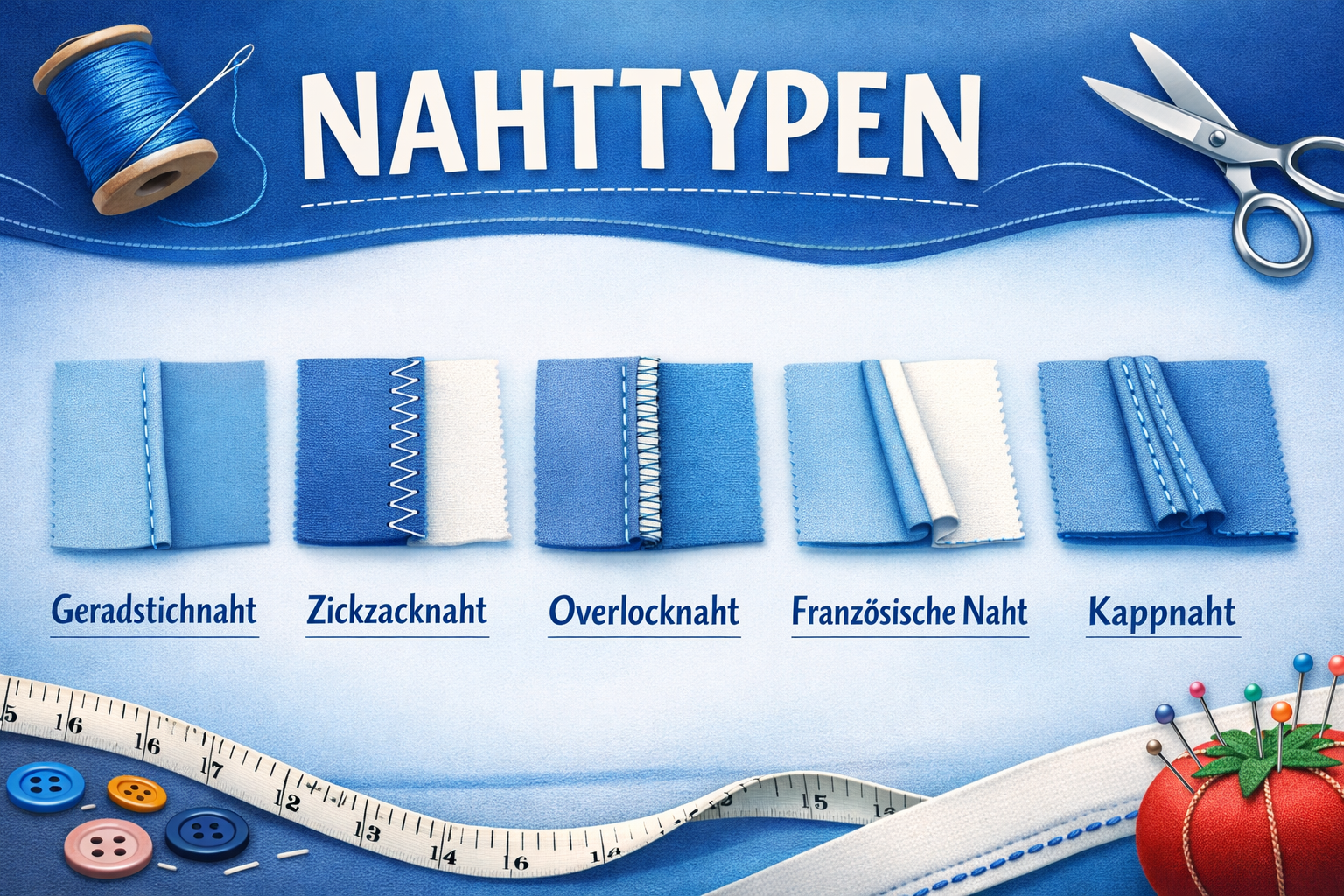
Introduction to Nahttypen in Sewing
Sewing is an art and craft that has evolved over centuries, blending creativity with functionality. At the heart of any sewing project lies the seam, the fundamental joinery that holds fabrics together. In German, these are known as Nahttypen, a term that encompasses the various methods and styles of creating seams. Understanding Nahttypen is essential for anyone, from beginners to seasoned tailors, as the choice of seam can affect the durability, appearance, and overall quality of a garment or item. This guide delves into the world of Nahttypen, explaining different types of seams, their applications, and tips for mastering them. Whether you’re crafting clothing, home decor, or accessories, knowing your Nahttypen will elevate your sewing skills.
Seams are more than just stitches; they are the backbone of construction. Nahttypen can be categorized based on their structure, purpose, and the fabrics they suit best. From simple straight seams to intricate decorative ones, each type serves a unique role. In this comprehensive article, we’ll explore the most common and specialized Nahttypen, providing step-by-step insights and practical advice. By the end, you’ll have a solid grasp of how to select and execute the right seam for your project.
The Basics of Seam Construction
Before diving into specific Nahttypen, it’s crucial to understand the basics of seam construction. A seam typically involves two or more layers of fabric stitched together along a line. The seam allowance—the extra fabric beyond the stitch line—varies but is usually 1/4 to 5/8 inch. Tools like sewing machines, needles, threads, and irons play key roles in achieving clean seams.
Nahttypen are influenced by factors such as fabric type (woven vs. knit), project requirements (strength vs. flexibility), and aesthetic goals. For instance, lightweight fabrics like silk demand delicate seams to prevent puckering, while heavy materials like denim require robust Nahttypen for longevity. Proper pressing after sewing is non-negotiable, as it sets the seam and ensures a professional finish.
Common Nahttypen: Plain and Open Seams
One of the most fundamental Nahttypen is the plain seam, also called an open seam. This is created by placing two fabric pieces right sides together and stitching along the edge with a straight stitch. The seam allowances are then pressed open or to one side. Plain seams are versatile and easy for beginners, making them ideal for most garments.
Advantages of this Nahttyp include its simplicity and adaptability. It’s commonly used in skirts, blouses, and linings where bulk isn’t an issue. However, raw edges can fray, so finishing techniques like pinking shears or zigzag stitching are recommended. For a variation, the closed plain seam presses allowances together and trims one side, reducing bulk in medium-weight fabrics.
In sewing terminology, plain seams fall under basic Nahttypen, but they can be enhanced with topstitching for added strength and decoration. Topstitching involves sewing parallel to the seam line on the right side of the fabric, often seen in jeans pockets or shirt collars.
Enclosed Seams: French and Flat-Felled
Moving to more refined Nahttypen, the French seam is a fully enclosed option perfect for sheer or lightweight fabrics. To create it, sew wrong sides together with a narrow allowance, trim, then flip to right sides together and stitch again, encasing the raw edges. This results in a neat, professional look inside and out, preventing fraying without additional finishing.
French seams are a staple in high-end lingerie and blouses, where visibility of seams matters. They’re time-consuming but worth it for delicate projects. A close relative is the hairline seam, a narrower version for ultra-fine fabrics like chiffon.
Another enclosed Nahttyp is the flat-felled seam, renowned for its durability. Commonly used in denim jeans and shirts, it involves sewing wrong sides together, trimming one allowance, folding the other over, and topstitching. This creates a strong, flat seam that’s comfortable against the skin and resistant to wear. Flat-felled seams are industrial favorites, often seen in workwear and outdoor gear.
Specialty Nahttypen for Specific Fabrics
Certain Nahttypen are tailored for challenging fabrics. For knits, the serged seam uses an overlock machine to stitch, trim, and finish edges in one pass. This prevents stretching and curling, making it ideal for T-shirts and activewear. If you don’t have a serger, a stretch stitch on a regular machine can mimic this.
For heavy fabrics, the lapped seam overlaps one edge over another and topstitches, reducing bulk. This Nahttyp is common in leatherwork and upholstery, where pins might damage materials—use clips instead.
Bias-bound seams encase raw edges with bias tape, adding a pop of color or pattern. This decorative Nahttyp is great for quilts and exposed seams in jackets. Similarly, Hong Kong seams (or bound seams) use bias binding on both sides for a luxurious finish in unlined coats.
Decorative and Functional Nahttypen
Sewing isn’t just practical; it’s expressive. Decorative Nahttypen like the piped seam insert cording between fabric layers for a raised, elegant border. Piping enhances cushions, dresses, and bags, adding structure and visual interest.
The princess seam, a curved Nahttyp, shapes garments like fitted bodices without darts. It follows body contours for a flattering fit in wedding gowns and tailored jackets. Mastering princess seams requires precise marking and easing.
For functionality, the welt seam combines strength with decoration. It’s a partial flat-felled seam with topstitching, used in tailored pants and coats. Another is the slot seam, where two fabric pieces are stitched to a underlying strip, creating an opening for inserts or buttons.
Advanced Nahttypen Techniques
As you progress, explore advanced Nahttypen like the mock flat-felled seam, which mimics the real thing without folding, saving time on lighter fabrics. Or the abutted seam, where edges meet without overlap, secured by zigzag or tape—perfect for non-fraying materials like felt.
In couture, invisible seams like the hand-rolled hem seam finish edges delicately. For heirloom sewing, the rolled hem Nahttyp uses a special foot for tiny, neat edges on handkerchiefs.
Technology influences modern Nahttypen too. Ultrasonic seams weld fabrics with sound waves, used in waterproof gear without threads. While not for home sewing, understanding these expands your knowledge.
Choosing the Right Nahttyp for Your Project
Selecting Nahttypen depends on fabric, purpose, and skill level. Test on scraps first. For strength, opt for flat-felled; for invisibility, French. Consider seam finishes: serging, binding, or clean-edge for professionalism.
Maintenance matters—some Nahttypen withstand washing better. In sustainable sewing, durable seams reduce waste by extending garment life.
Tips for Perfect Seams Every Time
Achieve flawless Nahttypen with these tips: Use sharp needles, match thread to fabric, and maintain even tension. Clip curves, notch convex seams. Press as you go. Practice on muslin for complex projects.
Common mistakes include skipping pinning or ignoring grain lines, leading to puckering. Invest in quality tools like seam gauges and ripping tools.
Conclusion: Mastering Nahttypen for Sewing Success
Nahttypen are the unsung heroes of sewing, transforming fabric into wearable art. From basic plain seams to advanced decorative ones, each type offers unique benefits. By understanding and practicing these Nahttypen, you’ll create durable, beautiful items. Experiment, learn from errors, and soon you’ll sew with confidence. Whether mending or designing, the right seam makes all the difference.
FAQ
What does “Nahttypen” mean in sewing?
Nahttypen is the German term for “seam types,” referring to the various methods used to join fabrics in sewing projects.
Which Nahttyp is best for beginners?
The plain seam is ideal for beginners due to its simplicity. It involves straight stitching and can be easily finished to prevent fraying.
How do I choose a seam for knit fabrics?
For knits, use a serged seam or stretch stitch to allow flexibility and prevent the fabric from stretching out of shape.
What’s the difference between a French seam and a flat-felled seam?
A French seam fully encloses raw edges for a clean interior, suitable for light fabrics, while a flat-felled seam is stronger and flatter, often used in denim for durability.
Can I use decorative Nahttypen for functional purposes?
Yes, many decorative seams like piped or topstitched ones also add strength and structure, making them both aesthetic and practical.
How do I finish raw edges in seams?
Common finishes include serging, zigzag stitching, pinking, or binding with bias tape to prevent fraying and enhance longevity.
Are there Nahttypen suitable for heavy fabrics like leather?
Lapped seams or abutted seams work well for heavy materials, as they reduce bulk and can be secured with topstitching or adhesive.
What tools do I need for advanced Nahttypen?
Beyond a sewing machine, consider a serger, bias tape maker, piping foot, and pressing tools like a tailor’s ham for curved seams.
How can I practice different seam types?
Start with scrap fabrics, follow online tutorials, and gradually incorporate them into simple projects like pillowcases or tote bags.
Why is pressing important in seam construction?
Pressing sets the stitches, reduces bulk, and ensures flat, professional-looking seams, improving the overall fit and appearance of the item.